Latest Developments in Nvidia Stock Performance
You’ve probably seen the name ‘Nvidia’ everywhere lately—on news sites, in conversations about AI, maybe even when you bought your last computer. If you feel like you’ve missed the story, you’re not alone. This is the simple, no-jargon guide to what’s really going on with the latest Nvidia stock news.
What if one company was building the essential tools for the biggest technology revolution since the internet? That’s the story of Nvidia. They design the powerful computer chips—the engines—that make artificial intelligence like ChatGPT possible. While they started by making video games look incredibly realistic, the massive impact of AI on Nvidia stock shows their story is now much, much bigger.
This company’s story is key to grasping where technology is heading next. We’ll break down exactly what drives Nvidia’s share price, from its core technology to the major business trends everyone is watching. By the end, you’ll be able to follow the conversation and explain the ‘why’ behind the headlines to a friend.
What Does Nvidia Actually Make? The ‘Brain’ Behind Modern AI and Gaming
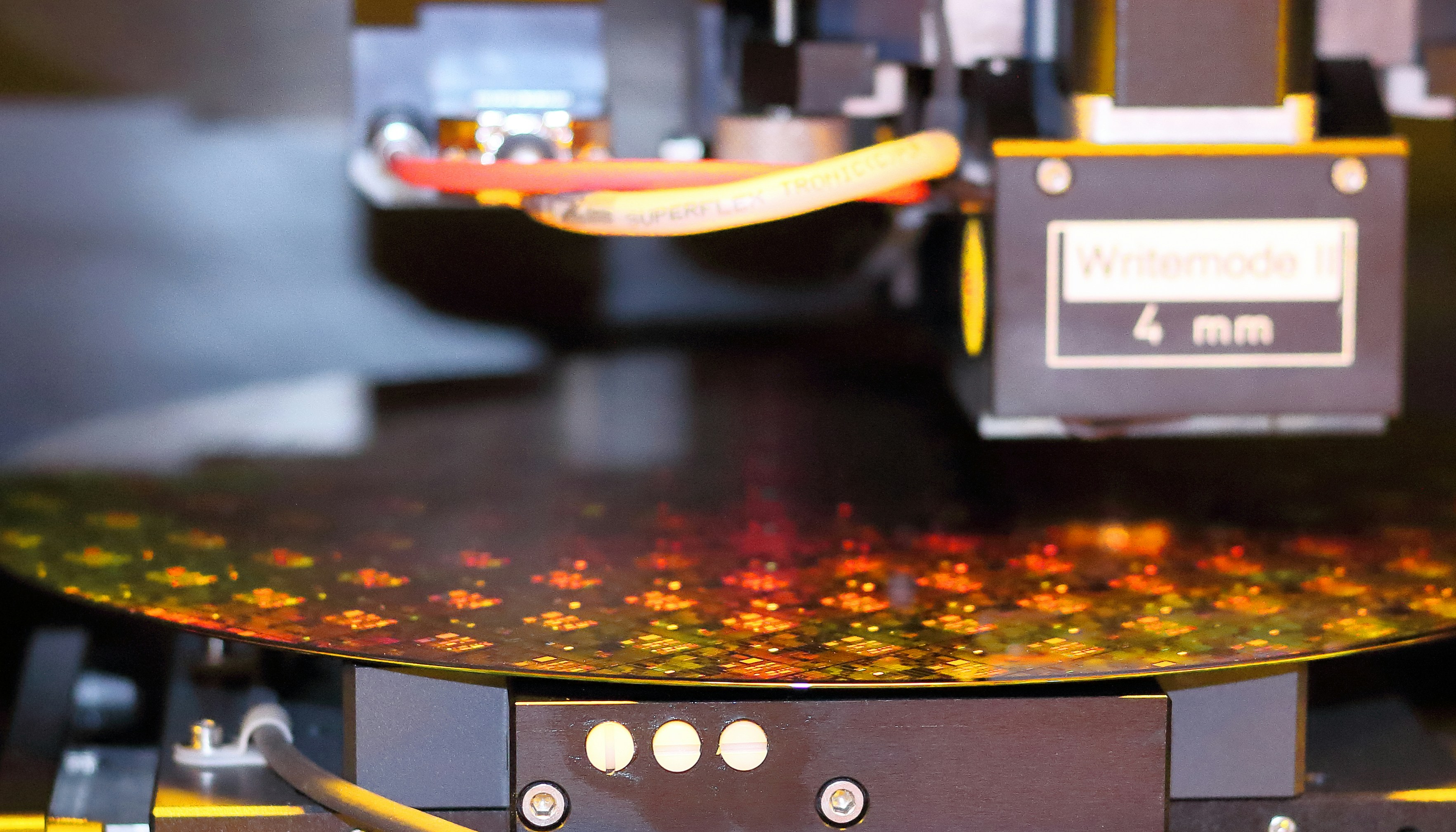
To grasp Nvidia’s meteoric rise, you need to know about two different kinds of computer chips. Your computer or phone has a main “brain” called a CPU (Central Processing Unit). It’s a brilliant jack-of-all-trades, handling everything from opening your web browser to running a spreadsheet. Nvidia, however, makes a different, highly specialized brain called a GPU (Graphics Processing Unit). Think of a CPU as a world-class chef who can expertly cook any dish one at a time. A GPU, in contrast, is like an army of 10,000 cooks all chopping onions simultaneously. It does one simple task, but it does it on a massive scale all at once.
This ability to do thousands of simple things in parallel was originally for making video games look incredibly realistic—rendering light, shadow, and textures for millions of pixels at the same time. But researchers soon realized this exact same superpower was perfect for artificial intelligence. Training an AI model involves showing it a gigantic amount of data (like millions of images or texts) and having it perform the same small calculation over and over. A GPU’s “army of cooks” design is tailor-made for this colossal, repetitive work.
This brings us to the AI boom. When you ask a question to a service like ChatGPT, your request is sent to a giant warehouse of computers—a data center—packed with thousands of Nvidia GPUs. They work together to process your request and generate a response in seconds. Nvidia isn’t just a player in the AI revolution; they build the very engines that power it.

How Nvidia Turns Powerful Chips into Billions in Revenue
Being the primary supplier of these “AI brains” is a great business, but how does that translate into the staggering numbers you see in the news? Nvidia organizes its sales into two main buckets, or business segments. Recognizing these two segments is the key to the company’s financial story.
For a long time, their biggest business was Gaming, selling the high-end graphics cards that power realistic video games directly to consumers and PC builders. The second, and now far larger, segment is Data Center. This is where Nvidia sells thousands of its most powerful GPUs in bulk to other massive companies—like Amazon, Google, and Microsoft—that are building the infrastructure for the AI revolution.
While gaming remains a healthy part of their business, the explosive growth has come almost entirely from the Data Center side. You can think of it as an arms race. Every major tech company is desperately trying to build more AI capabilities than its rivals, and Nvidia is selling them the essential “shovels and pickaxes” for this digital gold rush. This incredible demand is what caused their total sales, or revenue, to skyrocket.
This intense demand from a handful of the world’s largest corporations has completely reshaped Nvidia’s financial picture. The company’s success is now directly tied to how many of these ultra-powerful—and very expensive—AI chips they can sell each quarter. This is precisely why investors pay such close attention every three months when Nvidia releases its official “report card” to the public.
Decoding an Earnings Report: The ‘Report Card’ That Shakes the Stock Market
That “report card” is formally known as an earnings report, and it’s the single most important event for a company’s stock. Released every three months, it answers two fundamental questions: How much money did the company bring in from sales (its revenue)? And, after paying all its bills, how much did it get to keep (its profit)? For Nvidia, these numbers show just how many of those valuable AI chips they actually sold.
Here’s the twist: a company’s stock price doesn’t just react to how big those numbers are. It reacts to how they compare to predictions. Before the report, financial experts, called analysts, publish their “best guess” for what Nvidia’s revenue and profit will be. If Nvidia’s actual results are higher than this consensus guess, it’s called an “earnings beat.” This positive surprise is often what drives Nvidia’s share price up sharply after a report.
Beyond looking backward at the last three months, the report also looks forward through a section called guidance, which is arguably the most influential part of the announcement. Guidance is the company’s own forecast for how much it expects to sell in the next quarter. Strong guidance signals to investors that the leadership team believes the good times will continue, making them even more confident in the company’s future.
For beginners trying to analyze Nvidia stock, the earnings report comes down to checking two key signals: did they beat expectations for the past quarter, and are they promising continued strength for the next one? This powerful one-two punch of a great report card and an optimistic forecast has consistently fueled the stock’s incredible rise.
Is Nvidia’s Stock ‘Too Expensive’? A Simple Look at the P/E Ratio
After seeing a stock price soar, it’s natural to wonder if you’ve missed the boat or if the stock is now “too expensive.” To get a handle on this, investors use a simple tool called the Price-to-Earnings ratio, or P/E ratio. This metric compares the company’s current stock price to its annual profit per share. Think of it like buying a small rental property: the P/E ratio is like calculating how many years of rent it would take to earn back the property’s purchase price. A lower number suggests a better “deal” based on today’s earnings.
For a fast-growing company like Nvidia, however, you’ll often see a high P/E ratio. This doesn’t automatically mean the stock is a bad investment. It signals that investors are willing to pay a premium today because they are betting on massive profit growth in the future. Going back to our rental property analogy, a high P/E is like paying a top-dollar price for a house in a neighborhood where new freeways and businesses are being built. You’re betting that rents will skyrocket soon, not just paying for the rent it generates now.
A high P/E ratio is a measure of confidence, reflecting the market’s optimism about Nvidia’s future dominance in AI. This also creates one of the key risks of buying NVDA stock high: the company is priced for perfection. If its incredible growth ever slows down or fails to meet those sky-high expectations, the stock price could quickly adjust downward to better reflect its actual profits.
What Are the Risks? A Reality Check on Competition and High Hopes
While Nvidia currently holds a commanding lead, it’s not the only company racing to power the AI future. For years, its main competitor has been AMD, which is now aggressively developing its own AI chips to challenge Nvidia’s dominance. Think of it as a one-horse race that is suddenly seeing other powerful contenders join the track. If a competitor like AMD can offer a “good enough” alternative at a lower price, it could start to chip away at Nvidia’s market share.
Perhaps a more surprising challenge comes from Nvidia’s own customers. Tech giants like Google, Amazon, and Microsoft—the biggest buyers of AI chips—are pouring billions into designing their own custom chips. Their goal is simple: reduce their reliance on any single supplier and create hardware that is perfectly tailored to their specific needs, whether for cloud computing or consumer products. This is a significant long-term risk, as it could slowly shrink the pool of buyers for Nvidia’s top-tier products.
These competitive pressures circle back to the central risk we touched on earlier. Because the stock is priced for perfection, any sign that the company’s incredible growth might slow down could have a major impact. For anyone watching Nvidia, the key risks to monitor are:
- Rival Competition: Can companies like AMD gain a real foothold in the AI market?
- Customer Independence: Will major tech firms succeed in replacing Nvidia’s chips with their own?
- Slowing Growth: Can Nvidia continue to beat impossibly high expectations quarter after quarter?
Any “no” to these questions could challenge the optimistic story that has propelled the stock to its current heights.
Thinking Long-Term: The Role of Leadership and Software
When you look beyond the day-to-day stock price swings, two key factors give investors long-term confidence in Nvidia: its leadership and its software. For decades, the company has been guided by its founder and CEO, Jensen Huang. Often seen in his signature black leather jacket, Huang is recognized for his relentless, long-term vision. He steered the company toward AI years before it was a buzzword, a strategic bet that is now paying off massively. This kind of founder-led vision is rare and is often credited with a company’s ability to innovate rather than just react.
Beyond strong leadership, Nvidia’s true competitive advantage may be its software. The company has a platform called CUDA, which you can think of as a special programming language that tells its GPUs what to do. For over a decade, millions of developers and scientists have learned this language and used it to build everything from complex climate models to the AI engines behind services like ChatGPT. This creates a powerful “moat” around Nvidia’s business. Even if a competitor builds a great chip, it’s incredibly difficult and expensive for a company to rewrite all its software to switch.
The long-term case for Nvidia is a bet that the AI revolution is still in its infancy. The belief is that just as every business needed a website in the 2000s, nearly every industry will need AI capabilities in the coming decades—and that Nvidia will remain the primary engine powering that shift. This perspective frames Nvidia not just as a successful chipmaker, but as a foundational pillar of the next technological era.
Your Next Steps: How to Follow the Nvidia Story from Now On
Before, the constant stream of Nvidia news might have felt like overwhelming noise. Now, you have a framework for understanding the business behind the stock price. You’re no longer just watching a number fluctuate; you’re equipped to follow the story of a company powering the AI revolution, connecting its success in data centers and software directly to its market performance.
To put this knowledge into action, you don’t need to be a financial expert. Simply use this checklist to understand what news actually matters for Nvidia’s business model:
- Quarterly Earnings Reports: Do they continue to sell far more than experts predicted?
- Major AI Product Launches: Are their big customers announcing new services powered by Nvidia chips?
- Competitor Moves: Are rivals like AMD or Intel making significant gains with their own technology?
Keeping an eye on these key events is how to analyze Nvidia stock as a beginner—by focusing on the business itself. You now have the tools to understand the “why” behind the headlines and confidently follow the story of one of the most important companies shaping our world today.